

Paul — he wrote 13 epistles.
Paul, the Apostle Who Wrote the Most
He is credited with 13 of the New Testament’s 27 books, which is more than anyone else. He also started out on the other side of it, and was standing there approving when the first Christian was killed for it.
Which apostle wrote the most books of the New Testament?
👉 Paul — he wrote 13 epistles.
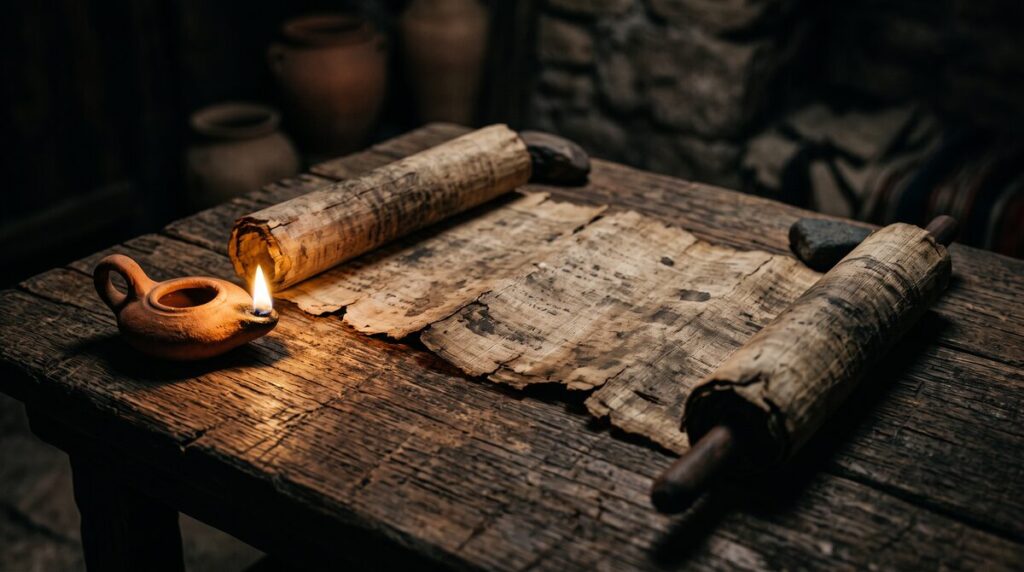
He was there holding the coats
He began as Saul, and he was serious about stamping the movement out.
Acts describes the stoning of Stephen, the first Christian killed for what he believed. The witnesses laid their coats at the feet of a young man named Saul. The text says he approved of it.
After that he went house to house having people arrested. He asked for letters of authority to take the campaign to Damascus, which was a considerable distance away. This was not casual hostility. It was organised, and he travelled for it.
What changed him happened on that road, and Acts tells it three separate times. He was blinded for three days. The man sent to help him argued about the assignment first. Everybody knew who Saul was, and what he had come to do.
The people he had been hunting were understandably slow to accept him. Someone had to vouch for him before they would meet him at all.
They were not written to be books
Here is the part that reframes the whole answer.
None of the thirteen were written as books. They are letters, and they are almost all reactive.
A church in Corinth was arguing about several things at once and someone wrote asking for a ruling. The letter answers point by point, and it is possible to work out roughly what the questions were from the shape of the replies. Galatians is written by someone plainly annoyed. Philemon is a short personal note about one man, sent to one household.
They were sent to specific towns to sort out specific problems, most of which had a deadline.
He did not usually write them himself. He dictated. At the end of Romans the man taking it down puts his own name in the text, uncredited elsewhere. “I, Tertius, who wrote this letter, greet you.” A working scribe writing himself a line, in the middle of what became one of the most studied documents in the world.
Several were written from prison. He mentions the chain.
What we can take from this
Almost nothing that lasted was written to last.
The thirteen letters were occasional documents. Urgent, local, sometimes irritated, aimed at a problem that needed solving that season. Nobody involved was thinking about the next two thousand years.
That is how most durable things get made. The building everyone photographs was put up to solve a housing shortage. The song that outlives the band was filler for a deadline. The advice someone still repeats decades later was given in a car park in about four sentences by a person who has completely forgotten it.
There is something freeing in that, and something slightly unnerving. The things people set out to make permanent are not usually the ones that stick. What sticks is whatever was made honestly for a real situation, and then happened to be useful again.
The other half is the coats. The most quoted writer in the New Testament is a man who once stood in a crowd and approved of a killing. Nothing in the text tidies that up or leaves it out. He refers to it himself, more than once, in the letters.
One thing worth sitting with
Someone had to vouch for him before anyone would be in a room with him. The man sent to help him said out loud that he did not want to go.
The text never records what the family of the man he watched die thought about any of it. That question is simply left alone.
Something on near you
Most of these letters were read aloud to a room of people who then had to work out what to do about them.
Walkn on Water lists 980 churches across 23 regions where the reading-aloud part still happens weekly. Find one near you