
Fun Things to Do With Your Youth Group in New Zealand
Fun things to do with your youth group in NZ are everywhere once you know where to look. You do not need a massive budget or weeks of planning – just a group of people, a bit of imagination, and the willingness to try something. This guide covers games, outings, service projects, creative nights, seasonal ideas, and planning tips to fill a full year of youth group nights that people actually want to show up to.
Games and icebreakers for any group size
Games set the tone for the night. The right one gets people laughing, loosens up the quiet ones, and gives newcomers something to do before they know anyone. The trick is choosing games that are quick to explain, impossible to take too seriously, and fun whether you have six people or sixty.
Team relay challenges. Set up a relay using whatever you have – cones, chairs, buckets, pool noodles, water balloons. Split into teams, explain the rules in under a minute, and let the chaos unfold. Theme them if you want (dress-up relay, obstacle course) or keep them dead simple. Relays work indoors or outdoors and scale to any size.
Minute-to-win-it rounds. Give each person sixty seconds to complete a silly challenge – stack cups into a pyramid, bounce a ping pong ball into a cup, balance a biscuit on your forehead and move it to your mouth without hands. Run five or six rounds back to back with a scoreboard. Takes twenty minutes and costs almost nothing.
Human bingo. Print bingo cards with prompts like “has been to the South Island,” “can name five books of the Bible,” or “can do a handstand.” Players mingle to find someone who matches each square. First to complete a row wins. The fastest way to get a room full of strangers talking.
Would you rather. Call out two options and have the group physically move to one side of the room. Start silly, then gradually go deeper. It reveals personality without putting anyone on the spot.
Silent ball. Everyone stands in a circle and passes a ball in silence. Drop it, make a noise, or throw a bad pass and you sit down. Last person standing wins. The tension builds fast. Great for calming a group down after a high-energy start.
Two truths and a lie. Each person shares three statements about themselves – two true, one made up. The group guesses which is the lie. It works best with smaller groups or as a small-group breakout and is one of the easiest icebreakers to run with zero preparation.
For more game ideas, check out our post on 11 Youth Group Games That Are Super Fun and Inclusive and 7 Fun Bible Games for Youth.
Outings and adventures worth planning
Some of the best youth group memories happen outside the usual venue. An outing gives the group a shared experience that becomes part of your story together. They take a little more planning but do not need to be expensive.
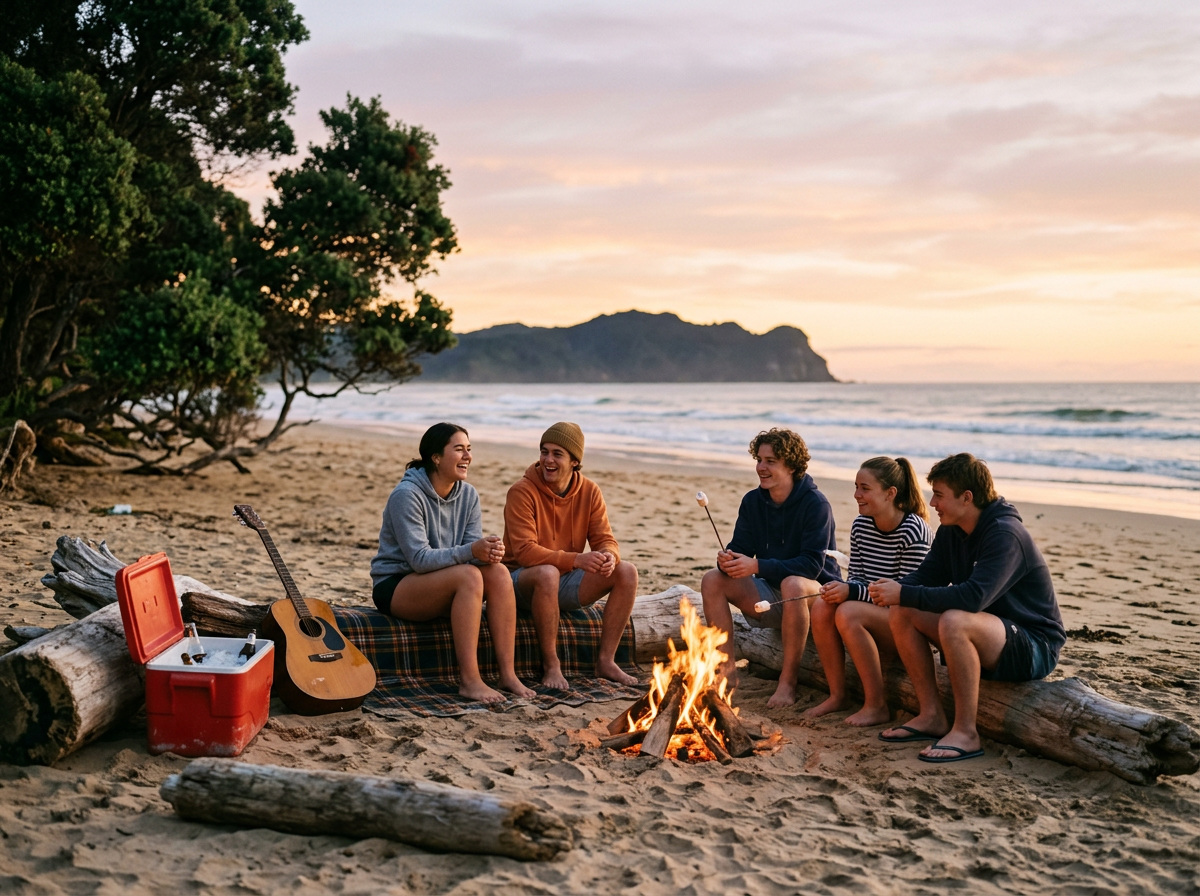
Beach bonfire or barbecue. Pick a local beach, bring sausages, a portable speaker, and camp chairs. Light a fire if the beach allows it. The setting does the work – salt air, sunset, good food, and nowhere to be. These nights cost next to nothing and are some of the most naturally social experiences you can create.
Bushwalk or day hike. New Zealand has hundreds of well-maintained trails suited to all fitness levels. Choose a DOC track, pack lunch, and enjoy the time together. Walking side by side opens up conversation in a way that sitting in a circle does not. Shorter loops work well for mixed groups; longer day hikes suit smaller, committed crews.
Escape room. Most cities and larger towns have escape room venues. Lock the group in, give them sixty minutes to solve puzzles and find the way out. It builds trust and teamwork under pressure, and it is a guaranteed conversation starter afterwards. Book ahead, as group sizes are usually capped.
Bowling, mini golf, or laser tag. Classic group outings that always deliver. They work for mixed ages, require zero preparation, and are easy to organise at short notice. Many venues offer group rates or party packages. Ask about mid-week discounts if budget is tight.
Movie night. Set up a projector in the church hall with blankets, beanbags, and popcorn for a DIY cinema night, or grab a group deal at a local theatre. Leave time afterwards to talk about it – some of the best discussions happen after a film that made people think.
Sports tournament. Organise a round-robin – touch rugby, volleyball, futsal, or backyard cricket. Mix up the teams so people play with others they do not usually hang out with. Add a silly trophy. Tournaments work especially well as inter-youth-group events with another church.
Camping weekend. A one or two-night trip takes more planning but creates some of the strongest bonds. Find a campground or a church member’s farm, sort food rosters, and build a programme around outdoor activities, worship, and fireside conversation. The change of environment does something that a regular hall night cannot.
Service projects that actually matter
Serving others is one of the most powerful things a youth group can do together. It connects the group to real needs in their community and gives teenagers something to care about beyond themselves.
Community clean-up. Pick a local park, beach, or reserve and spend a Saturday morning clearing rubbish. Bring bin bags, gloves, and snacks. Split into teams and make it a friendly competition. Visible, satisfying, and leaves a mark the group can see every time they drive past.
Care packages for a local shelter or food bank. Collect non-perishable food, toiletries, warm socks, or blankets and deliver them together. Contact a local shelter ahead of time to find out what they actually need most – it makes the effort more targeted and more meaningful.
Visit a rest home. Arrange to visit a nearby aged care facility. Play board games, share afternoon tea, or simply sit and listen to stories. Many rest homes welcome group visits and will help you organise the session. For teenagers, it is a perspective-shifting afternoon.
Letter-writing campaign. Write handwritten letters of encouragement to people in the community – hospital patients, essential workers, first responders, or isolated elderly residents. Each letter takes five minutes. As a group of fifteen, you can send out dozens in a single night. Low cost, easy to set up, and deeply personal.
Fundraiser for a cause. Run a sausage sizzle, bake sale, car wash, or mufti day with proceeds going to a cause the group has chosen together. The fundraiser itself is fun to plan, and letting the group decide where the money goes makes it land harder.
Volunteer at a local event. Community events, school fairs, and charity runs often need volunteers for setup, pack-down, or food service. Offer your youth group as a crew. It builds the group’s reputation and gives everyone a sense of contribution.
Worship and creative nights
Not every youth group activity needs to be loud. Some of the most meaningful nights are the quiet ones that give people space to think, create, and connect with God on their own terms.
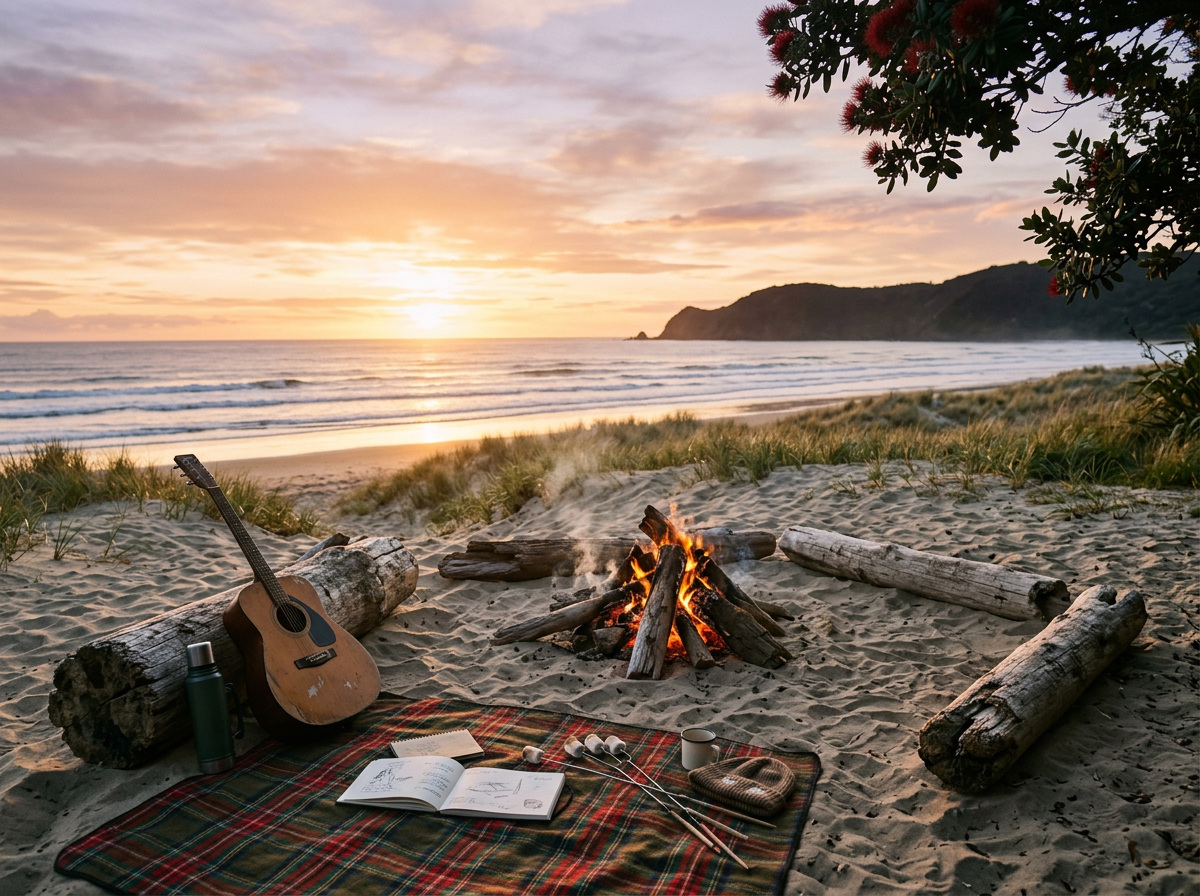
Acoustic worship night. Strip it back. A guitar, a few voices, low lighting. No stage, no production. Just music and space. Let people sit, stand, or lie on the floor – whatever helps them engage. These nights often feel more genuine than the polished ones.
Creative expression session. Set up stations around the room journaling, painting, clay, collage, chalk art. Give the group a theme or a Bible passage and let people respond however feels natural. Play ambient music, keep the lights low. These sessions often unlock thoughts that a discussion would not.
Testimony night. Invite two or three people to share a short, honest story about their faith journey – where they started, what challenged them, where they are now. It builds trust, normalises vulnerability, and often sparks the best conversations of the year. Give each person a five-minute window and let it be informal.
Prayer walk. Walk through the neighbourhood as a group, stopping at key spots a school, a park, a business to pray for the community. It changes the way people see their own streets.
Film and discussion night. Choose a film or documentary that connects to a theme the group has been exploring identity, purpose, forgiveness, justice. Watch together, then break into small groups with three or four prepared questions. Some of the deepest youth group conversations happen after watching something together.
Seasonal ideas for youth groups in NZ
Tying activities to the season keeps things fresh and gives the group something to look forward to throughout the year.
Summer (December to February). Beach days, outdoor games tournaments, camping weekends, end-of-year celebrations, water fight nights, and sunrise worship sessions. Take advantage of long evenings to get outside.
Autumn (March to May). Bonfire nights, movie marathons, hot chocolate evenings, Anzac-themed service projects, and planning for the year ahead. Easter camps usually fall here – a natural high point for the group.
Winter (June to August). Indoor games nights, trivia competitions, baking challenges, cosy worship sessions, board game tournaments, and themed dress-up nights.
Spring (September to November). Community clean-ups, outdoor adventure days, service project kickoffs, and end-of-term events. Energy lifts as the weather improves – use that momentum.
If you are looking for camps over Easter or summer, check out our guides.
Christian Easter Camps in New Zealand
Christian Summer Camps in New Zealand
Tips for planning youth group activities
If you are a youth leader trying to keep things interesting, a few principles go a long way.
Mix it up. Rotate between high-energy, creative, service, and social activities so the group never falls into a rut. A group that seems flat during a discussion might come alive on a game night.
Ask the group. The best activity ideas often come from the young people themselves. Run a quick poll, keep a suggestion box, or ask at the end of a night. When people feel ownership over what happens, attendance goes up.
Keep it inclusive. Choose activities that work for different abilities, personalities, and comfort levels. Not everyone thrives in loud, competitive settings. Balance team games with quieter creative options so everyone has a place.
Do not overthink it. Some of the best nights are the simplest. Pizza, a conversation starter, and time to hang out can be just as valuable as a planned event. Consistency matters more than spectacle.
Plan a term at a time. Map out a rough calendar for each school term with a mix of activity types. It reduces last-minute stress, gives the group something to look forward to, and makes it easier to invite new people when you can tell them what is coming up.
For more ideas on what youth group is like and how to get involved, check out our other guides:
What Happens at a Christian Youth Group
Making Christian Friends as a Teenager in NZ
Get a Free Bible Delivered to Your Door
Frequently asked questions
What are good youth group activities for large groups?
Team relays, trivia nights, and wide games like capture the flag keep everyone involved. You can also split into smaller teams for station-based activities so nobody is standing around.
How do I suggest new activities to my youth leader?
Most leaders genuinely want input. Raise ideas at the end of a night, send a message, or offer to help organise something. Leaders appreciate it when young people take ownership.
What are some free activities for youth groups in NZ?
Beach days, bushwalks, community clean-ups, prayer walks, acoustic worship nights, and DIY games nights are all free or close to it. New Zealand’s outdoor environment makes free activities easy to pull off.
How do we plan a service project as a youth group?
Choose a cause the group cares about. Decide on something practical – a clean-up, collection drive, rest home visit, or fundraiser. Contact the organisation, assign tasks, set a date, and keep it simple.
Can youth group activities include non-Christians?
Absolutely. Most youth groups encourage bringing friends regardless of beliefs. Games nights, outings, and service projects are especially welcoming because they focus on connection rather than faith knowledge.
How often should a youth group try something new?
Mixing in a new activity every few weeks keeps things fresh without losing consistency. You do not need to reinvent the wheel every week – just enough variety to keep people curious about what is next.