

Sheep
The Bible’s Most-Mentioned Animal
Most people guess a lion, or a donkey, or a camel. Those all turn up plenty. But the animal that appears more than any other is the least dramatic one on the list. It shows up over 500 times, in almost every book, and it is not impressive at all.
What animal is mentioned most often in the Bible?
👉 Sheep.
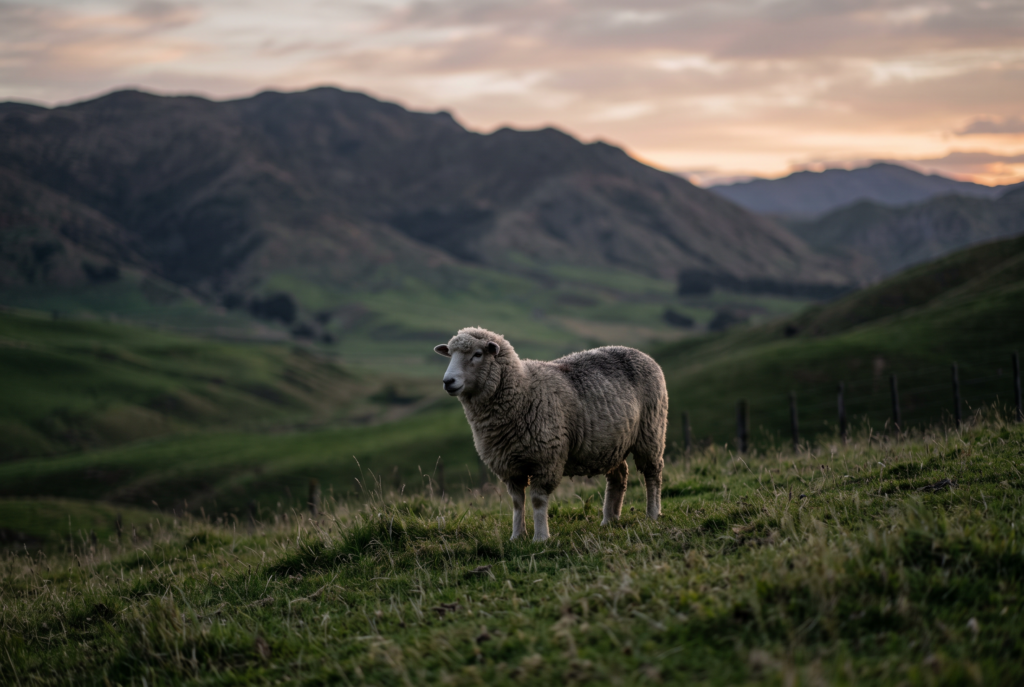
Why a boring animal ended up everywhere
Sheep were everywhere in the ancient Middle East because they were useful in every possible direction. Wool for clothing. Milk. Meat. Skins. And they could live on rough, dry ground that would not grow crops.
If you owned sheep, you were not rich exactly, but you were not in trouble either. They were the family savings account, walking around on legs.
So when Bible writers wanted an image everyone would instantly understand, they reached for sheep. Nearly every reader had either owned some or worked with someone who did.
But there is a second reason, and it is less flattering.
Sheep are not clever. They wander off without noticing. They follow whichever sheep happens to be moving. Left alone, a sheep will graze its way over a hill, lose the flock entirely, and only realise it is in trouble when it is already lost and cannot find the way back.
They are also almost defenceless. A sheep has no claws, no speed, and no real instinct for hiding. Without a shepherd, a sheep in open country does not last long.
Writers across both testaments use that on purpose. When people are compared to sheep in the Bible, it is not a compliment about being gentle. It is a comment about wandering off without meaning to.
There is a line in Isaiah that puts it plainly: “we all, like sheep, have gone astray, each of us has turned to our own way.” Not rebelled. Not stormed off. Just drifted, each in our own direction, one patch of grass at a time.
Jesus used the same picture constantly, and he knew exactly what it meant to his audience. When he told a story about a shepherd leaving 99 sheep to go after one that wandered, nobody in that crowd thought the missing sheep was brave or interesting. They thought it was an idiot. That was the point of the story.
What we can take from this
Almost nobody ruins something on purpose. Most people just drift, one reasonable choice at a time.
Almost nobody ruins something on purpose.
Most of the time people do not make a big dramatic decision to walk away from their friends, or their family, or the person they meant to be. They just drift. One small choice, then another one, each one perfectly reasonable on its own. Nobody notices they are drifting, because from the inside it looks like a series of ordinary days.
That is exactly what a sheep does. It never decides to get lost. It just keeps its head down, follows the next patch of grass, and looks up an hour later somewhere completely unfamiliar.
It is a slightly uncomfortable image, which is probably why it stuck around for three thousand years. Being called dangerous is almost a compliment. Being called easily distracted is closer to the truth, and harder to argue with.
One thing worth sitting with
The writers had every animal available to them and picked the one that wanders off without meaning to.
Is that an insult, or is it just accurate? Three thousand years later nobody has swapped it out for something more flattering.
Something on near you
Sheep do badly alone. People are not much different.
There are 263 youth groups and 980 churches listed on Walkn on Water, and most of them exist mainly so people have somewhere to turn up to. See what’s near you